
24/7 · All five NYC boroughs
House trap cleaning in NYC
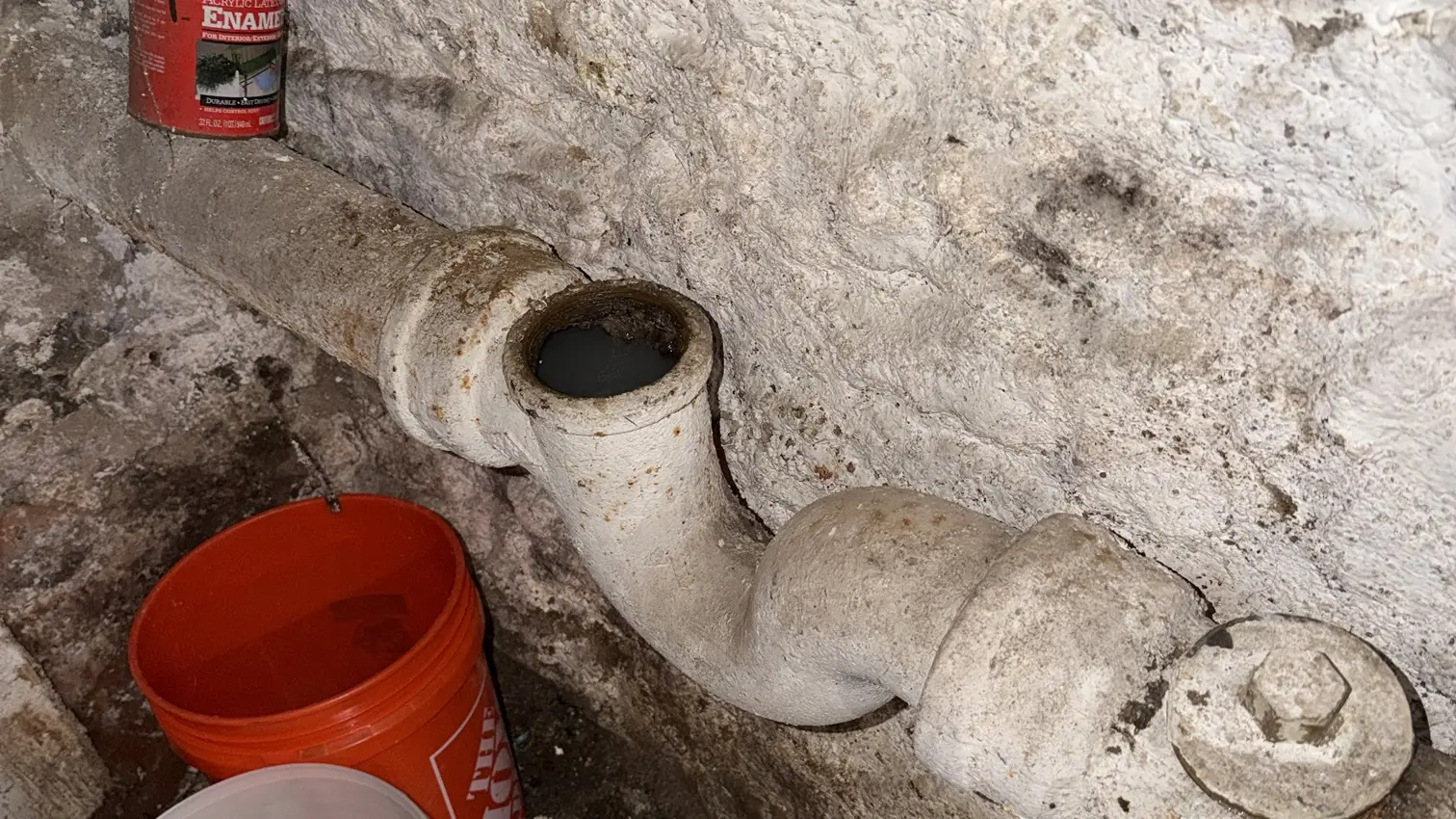
The house trap is a U-shaped fitting on the main sewer line near the front wall of many older NYC buildings. It clogs easily with wipes and paper, and when it does, the whole building backs up. We clear the trap and the line past it, then camera it. Starting at $595.
- Answered 24/7
- Price confirmed before work starts
Starting prices. Every job is different, so the technician confirms your price on site before any work starts. Nights, weekends and holidays add $150. All prices
Where to find your house trap
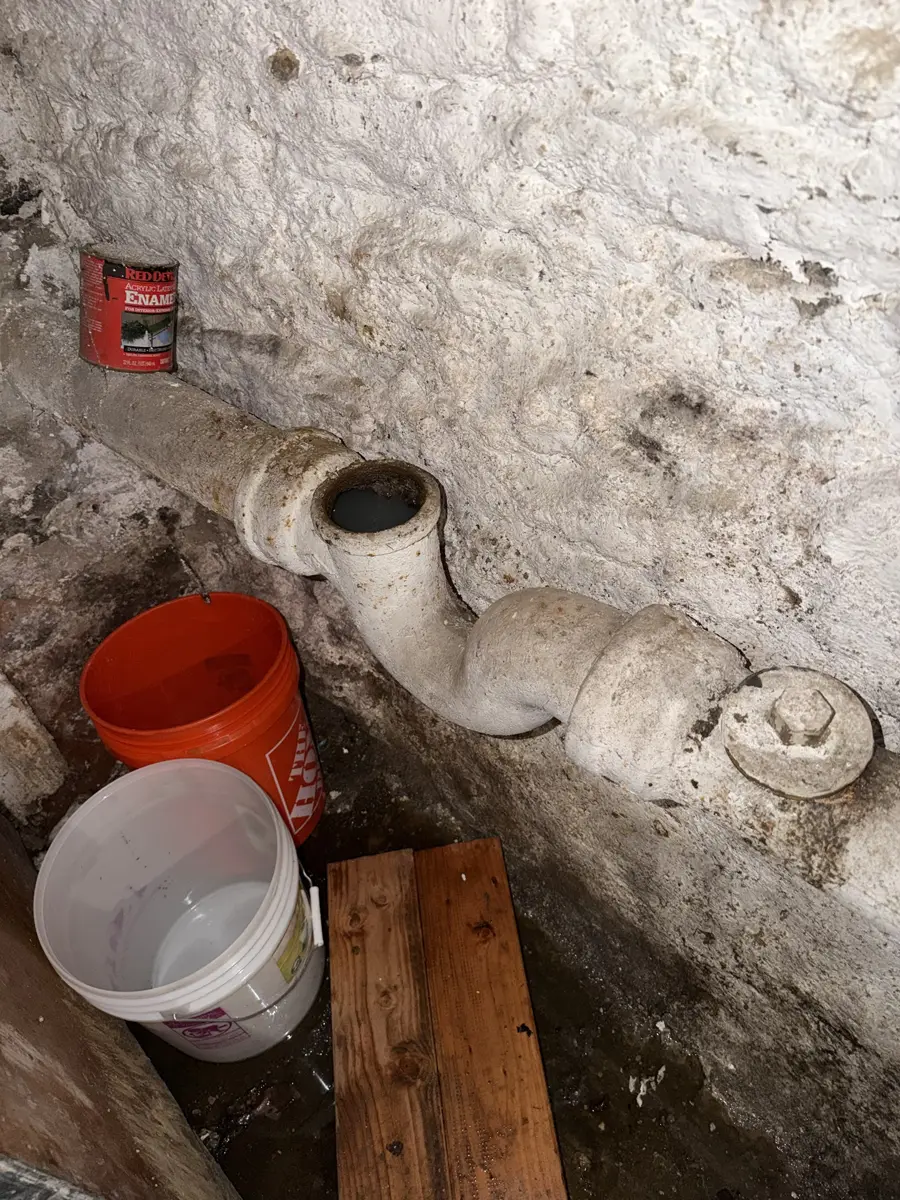
In most NYC brownstones, rowhouses and older houses, the main sewer line leaves through the front foundation wall. The house trap sits just inside, often below the basement floor in a small pit or flush with the floor, with two round plugs on top. Near it, there’s often a vent pipe running to the front yard or sidewalk, called the fresh-air inlet.
Signs the house trap is clogged
- Water or sewage comes up through the basement floor drain.
- Every drain in the building is slow at once.
- Sewer smell in the basement or near the front of the house.
- Water seeping around the trap’s cleanout plugs.
- Air or water bubbling from the fresh-air inlet outside.
How we clear it
- Relieve the pressure safely so the plug can be opened without flooding the basement.
- Open the cleanout on the street side of the trap.
- Clear the trap and the line toward the street with a sewer machine.
- Clear the house side if the blockage extends back into the building.
- Flow-test and camera the line so you see it’s open and why it clogged.
- Close up and clean the area.
Why NYC buildings have house traps
House traps were standard in New York for generations to keep sewer gas and pests from coming in from the street sewer. Many brownstones, rowhouses and prewar buildings still have them. They work, but they’re the first place a clog forms. Read more in what is a house trap.
The parts of a house trap
| Part | What it does |
|---|---|
| The U-bend | Holds water that blocks sewer gas from the street |
| Two cleanout plugs | Access to clear the trap toward the street or back toward the building |
| Fresh-air inlet | A vent near the front of the house that lets air into the system |
Why house traps clog more than other spots
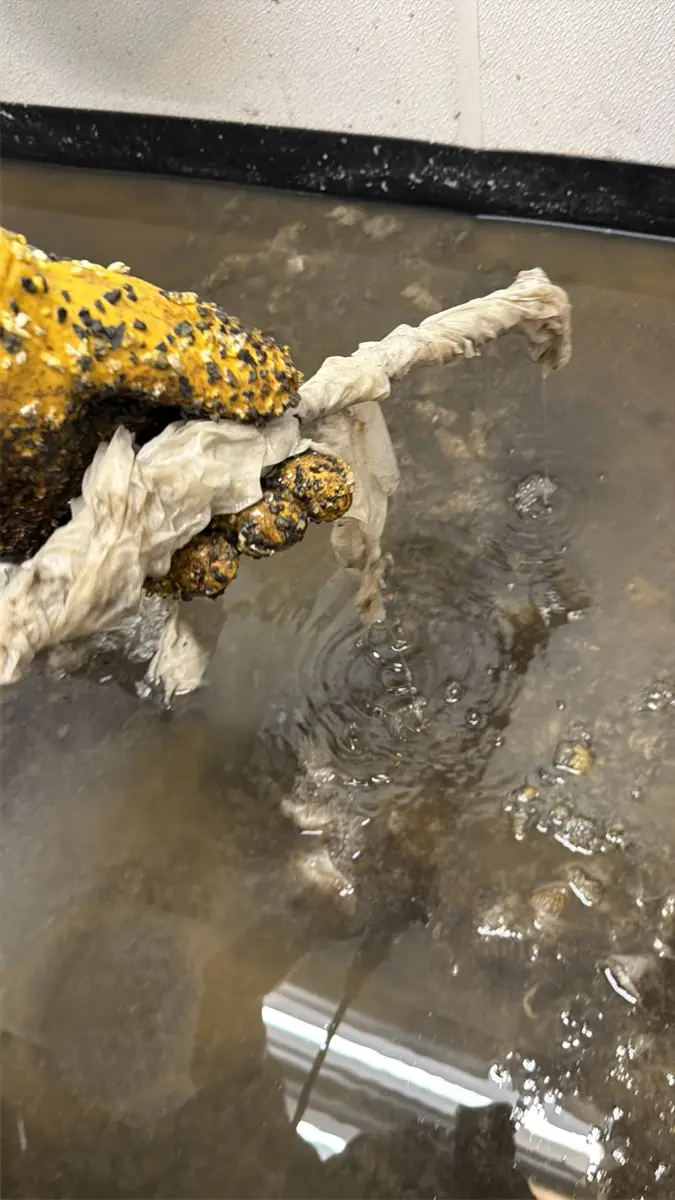
The bend slows the flow just before the line leaves the building. Anything that doesn’t break down easily, like wipes, paper towels and grease, collects there first. Older traps also have rough cast iron walls that catch debris. That’s why the house trap is the first place we check in a brownstone or older house when every drain backs up at once.
After the trap is cleared
- Keep wipes, paper towels and grease out of every drain in the building.
- Make sure both cleanout plugs are closed tight. A loose or missing plug lets sewer gas into the basement.
- If the trap clogs more than once a year, a camera inspection of the line beyond it shows whether there’s a bigger problem, like roots or a sag.
From real jobs
Photos and footage from our own work. No stock images.
Where we work
What we don't do. We clear, clean and inspect drains and sewer lines. If the camera shows a cracked, collapsed or separated line, you get the footage and a referral to an NYC master plumber for the fix. Why we work this way
Common questions
What is a house trap?
A U-shaped section of pipe on the building's main sewer line, usually near the front foundation wall, with two cleanout plugs on top. It holds water to block sewer gas from the street sewer. See our full guide.
Why do house traps clog?
The U-bend slows the flow. Wipes, paper towels and grease catch there first. It's the most common clog point we find in brownstones and rowhouses.
How much does house trap cleaning cost?
Clearing the trap and the main line past it starts at $595, with a camera check included.
Can I open the house trap plugs myself?
We don't recommend it during a backup. If the line is full, sewage comes out under pressure as soon as the plug loosens, and the plugs on older traps are often seized.
My house trap cleanout plug is leaking or missing. Can you fix it?
We'll tell you what we see. Replacing or resetting trap fittings is pipe work, so we refer that to an NYC master plumber.
Can a house trap be removed?
Changing or removing a house trap is pipe work, which we refer to an NYC master plumber. We clear and inspect it.
Need a drain cleared?
Calls are answered 24 hours a day. A technician looks at the job and confirms your price on site before any work starts.