
24/7 · All five NYC boroughs
Main sewer line cleaning in NYC
When several drains back up at once, the blockage is almost always in the main sewer line that carries everything from the building to the street. We clear it through the cleanout or house trap and run a camera to confirm it's open. Starting at $595.
- Answered 24/7
- Price confirmed before work starts
Starting prices. Every job is different, so the technician confirms your price on site before any work starts. Nights, weekends and holidays add $150. All prices
Signs your main sewer line is clogged
The main sewer line, sometimes called the house drain or building sewer, collects every drain in the building and carries it to the city sewer. When it clogs, the water has nowhere to go but back up through the lowest openings.
- Water or sewage comes up through a basement floor drain.
- The toilet bubbles or rises when the washing machine drains.
- The tub fills with dirty water when someone flushes upstairs.
- Every drain in the house is slow at the same time.
- There’s a sewer smell near the cleanout or floor drain.
- The backup gets worse during heavy rain.
What to do right now: stop all water use in the building. Every flush, shower and dishwasher cycle adds to the backup. Then call. More in sewer backing up.
How we clear a main sewer line
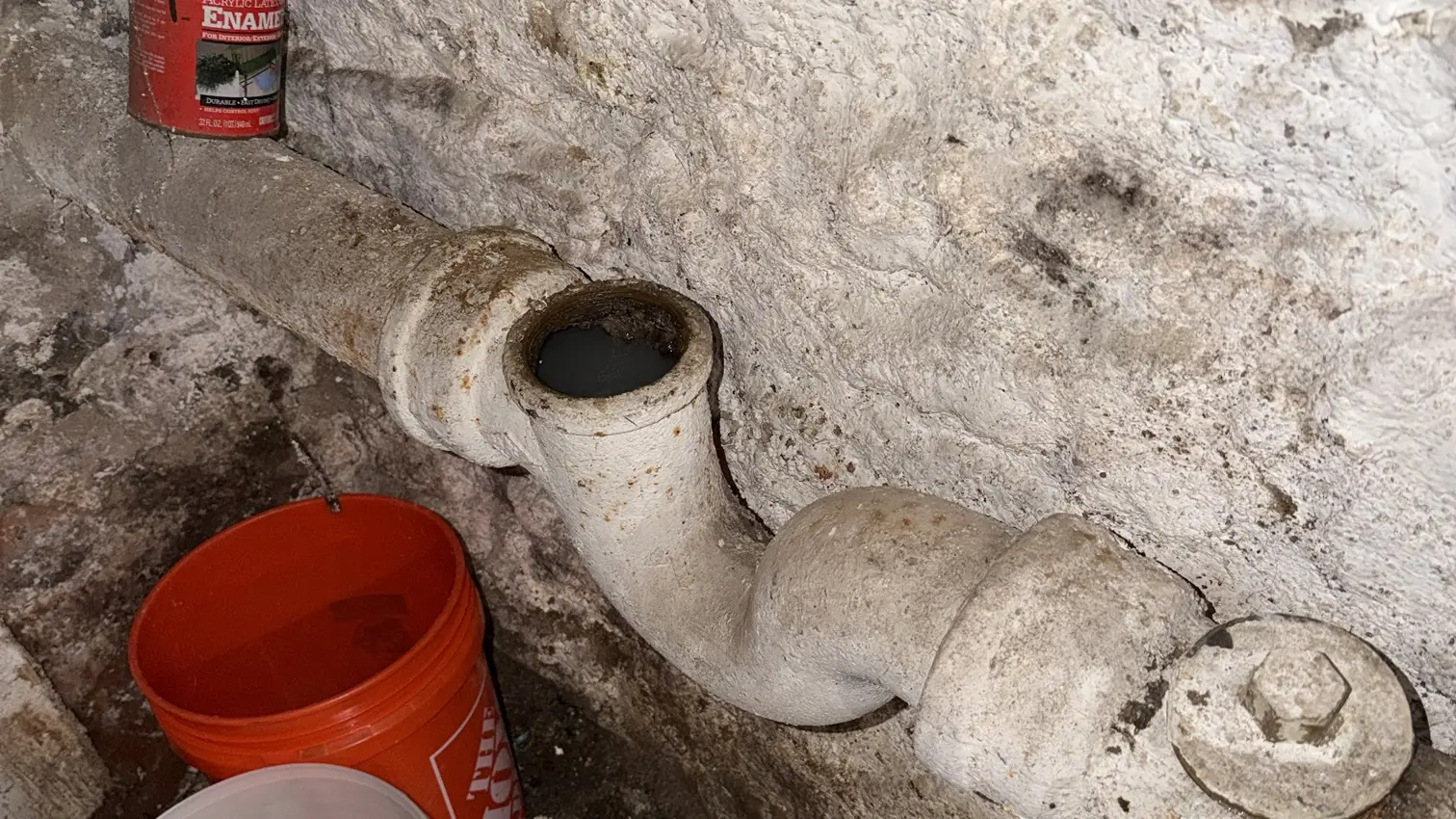
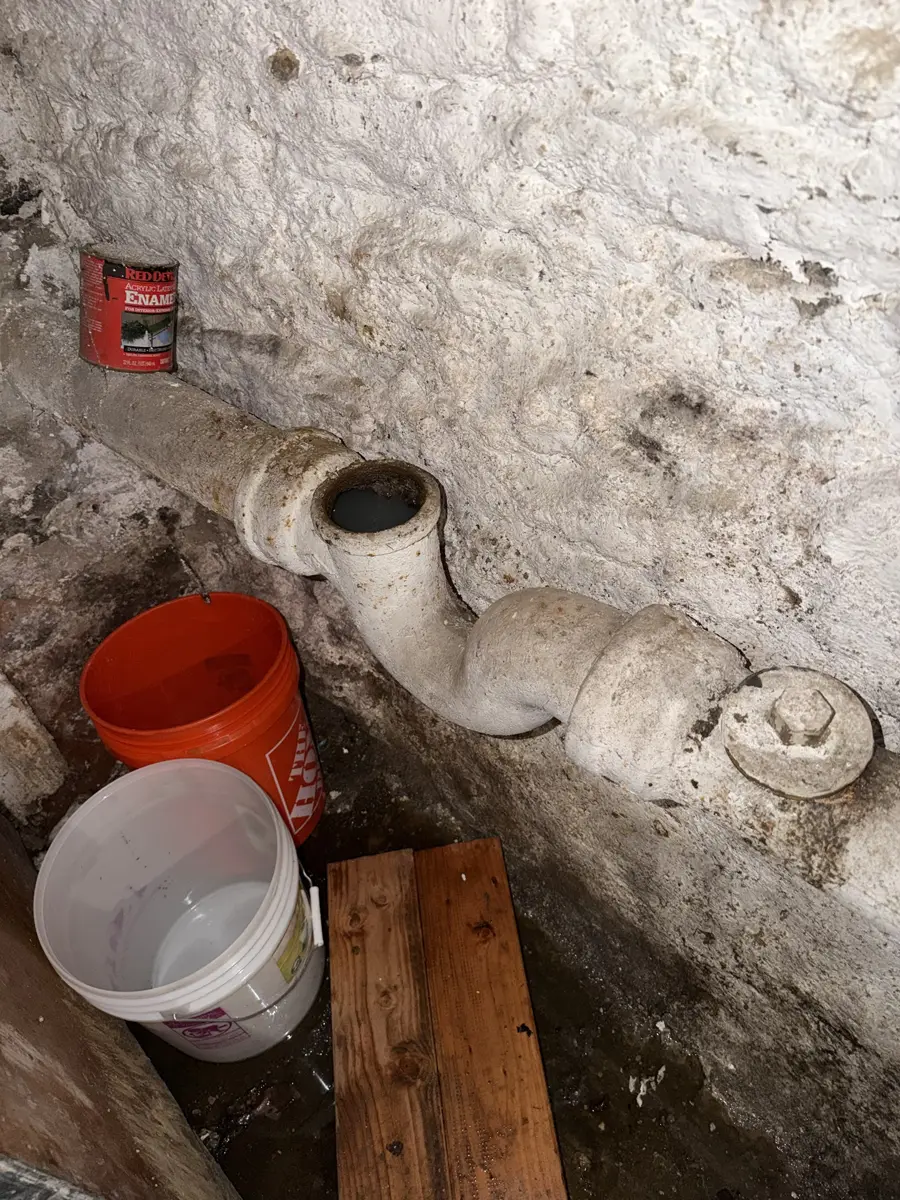
- Find the access point. In most NYC buildings that’s the house trap near the front wall, a cleanout in the basement, or an outside areaway or yard cleanout.
- Clear the line. A heavy-duty sewer machine with cutting blades sized to the pipe runs from the cleanout toward the street until the blockage breaks free and water drains.
- Flow-test it. We run water from upstairs fixtures to confirm the whole system drains.
- Run the camera. A camera goes down the cleared line so you can see what caused the clog and whether anything else is wrong, like roots, a sag or a crack.
- Recommend next steps. If the line is sound and clean, you’re done. If it’s full of grease or roots, we price hydro jetting before doing anything else.
Main line clearing vs hydro jetting
| Main line clearing | Hydro jetting | |
|---|---|---|
| How it works | Rotating cutting blades open the line | High-pressure water scours the full pipe wall |
| Best for | Sudden blockages from wipes, paper, debris | Grease, roots, scale, repeat backups |
| How long it lasts | Until buildup or roots return | Much longer, because the wall is cleaned |
| Price | Starting at $595 with camera | Starting at $895 residential, $1,200 commercial |
Main sewer lines in NYC buildings
- Brownstones and rowhouses: the main runs through a house trap near the front wall. Traps clog with paper and wipes and are the first place we check.
- Two-family and multifamily houses: one main serves several units, so one tenant’s wipes can back up everyone’s basement.
- Houses with trees out front: roots find joints in older clay and cast iron mains. See tree roots in the sewer line.
- Low-lying blocks: NYC’s combined sewers carry rainwater and sewage together in much of the city. A line that’s already partly blocked backs up faster during storms.
What’s included
- Clearing through an accessible cleanout or house trap
- A flow test from upstairs fixtures
- A camera check of the cleared line
- A plain explanation of what caused the backup
If there’s no accessible cleanout, or the line needs jetting, you get the price before we continue.
What causes main line clogs in NYC
- Wipes and paper towels. They don’t break down like toilet paper and they snag at the house trap and at joints.
- Grease. Kitchen grease cools and hardens along the main, especially in multifamily buildings where several kitchens drain into one line.
- Tree roots. Street and yard trees grow into joints in older clay and cast iron lines. See tree roots in the sewer line.
- Sags and offset joints. Low spots and misaligned joints in older lines collect debris until it blocks. A camera inspection shows them.
- Renovation debris. Grout, plaster and construction dust washed down a drain settle in the main.
- Heavy rain. In much of NYC, rain and sewage share the street sewer. When it fills up in a storm, a line that’s already partly blocked backs up first.
Your line or the city’s?
In NYC, the property owner is generally responsible for the sewer line from the building out to the connection with the city sewer, including the part under the sidewalk and street. If several buildings on your block are backing up at the same time, or the camera shows your line is clear all the way out, the problem may be in the city sewer, and you should report it to 311. More in who owns the sewer line in NYC.
What changes the price
Main line clearing starts at $595 with a camera check included. The technician confirms your price on site before any work starts. Things that can change it:
- Access. An accessible cleanout or house trap keeps the job simple. No cleanout means more work to reach the line.
- Length of the run. Long laterals to the street take longer to clear.
- What’s in the line. Heavy grease or roots may call for hydro jetting, starting at $895 residential.
- Timing. Nights, weekends and holidays add $150.
Keep the main line flowing
| Building type | What to do |
|---|---|
| House or brownstone | No wipes, a strainer in the kitchen sink, and a camera check every few years on older lines |
| Two- to six-family | Tell every tenant: no wipes, no grease. Consider yearly jetting if the main backs up more than once a year |
| House with big trees out front | Root jetting every one to two years, based on what the camera shows |
| Apartment building | Scheduled jetting of the main and kitchen stacks. See property managers |
| Restaurant | Scheduled grease line jetting. See restaurants |
From real jobs
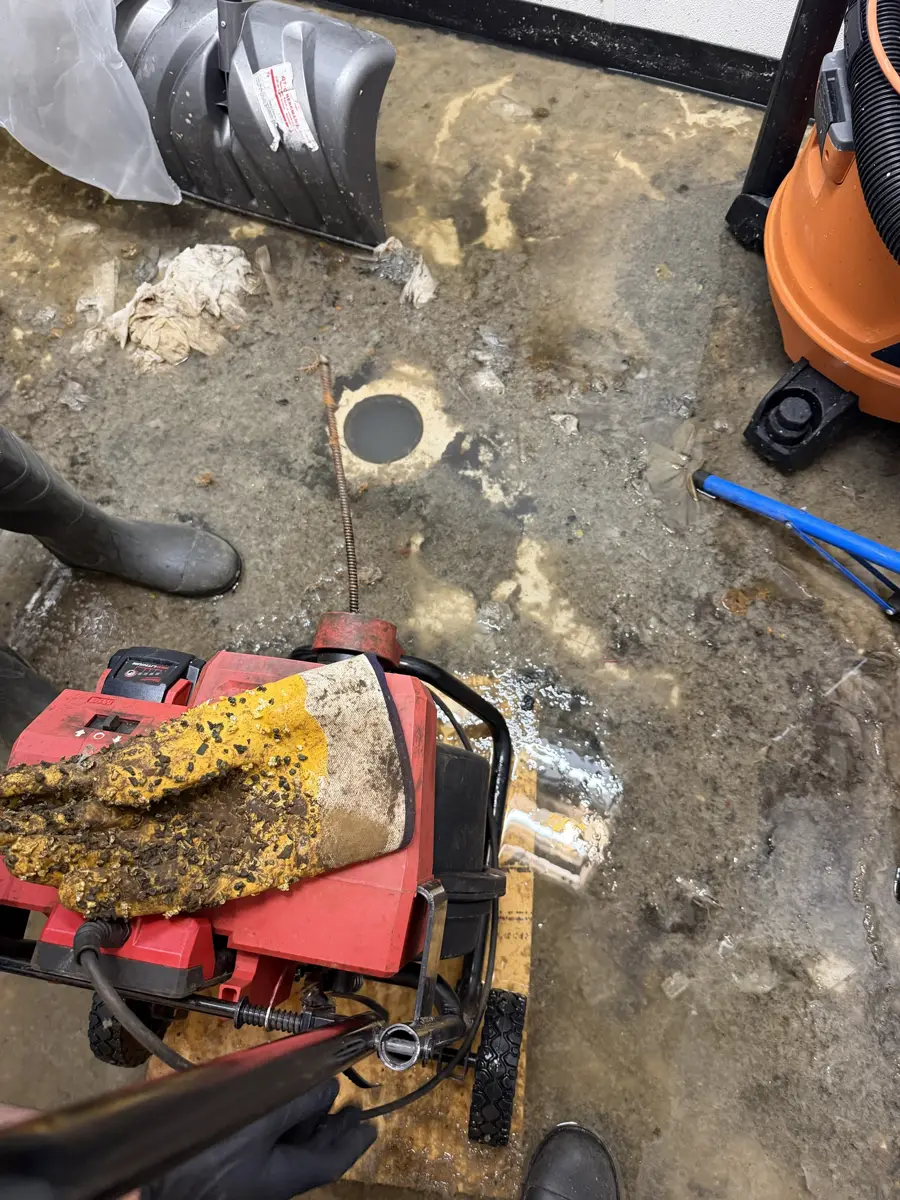
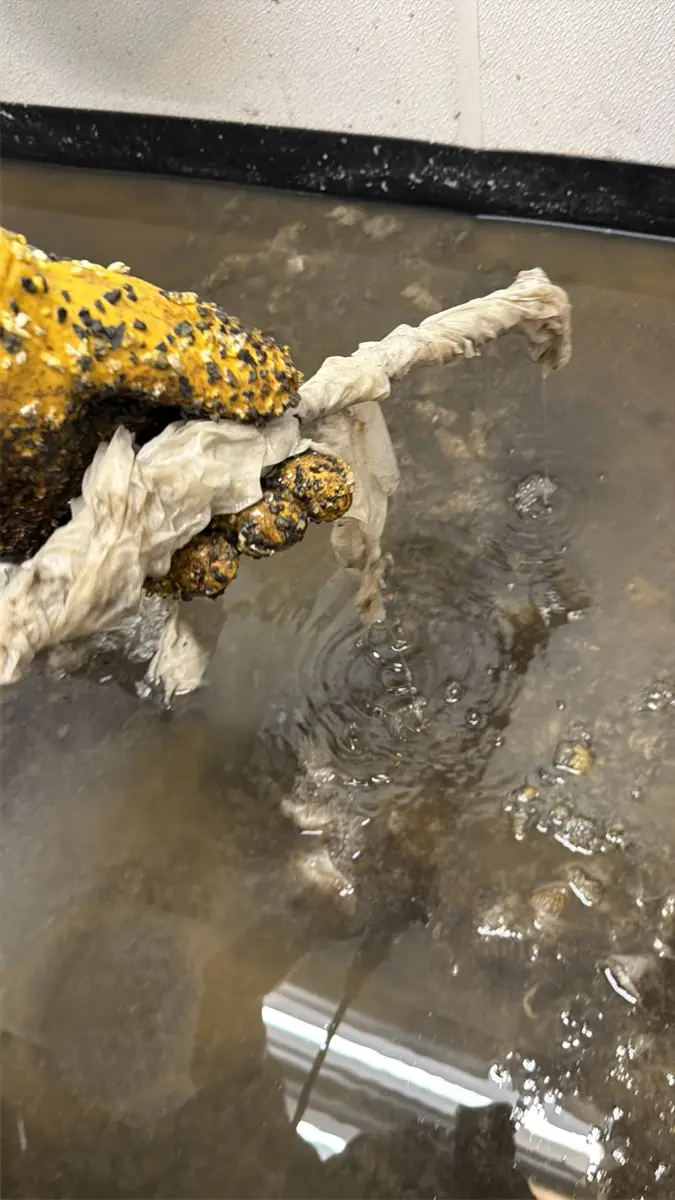
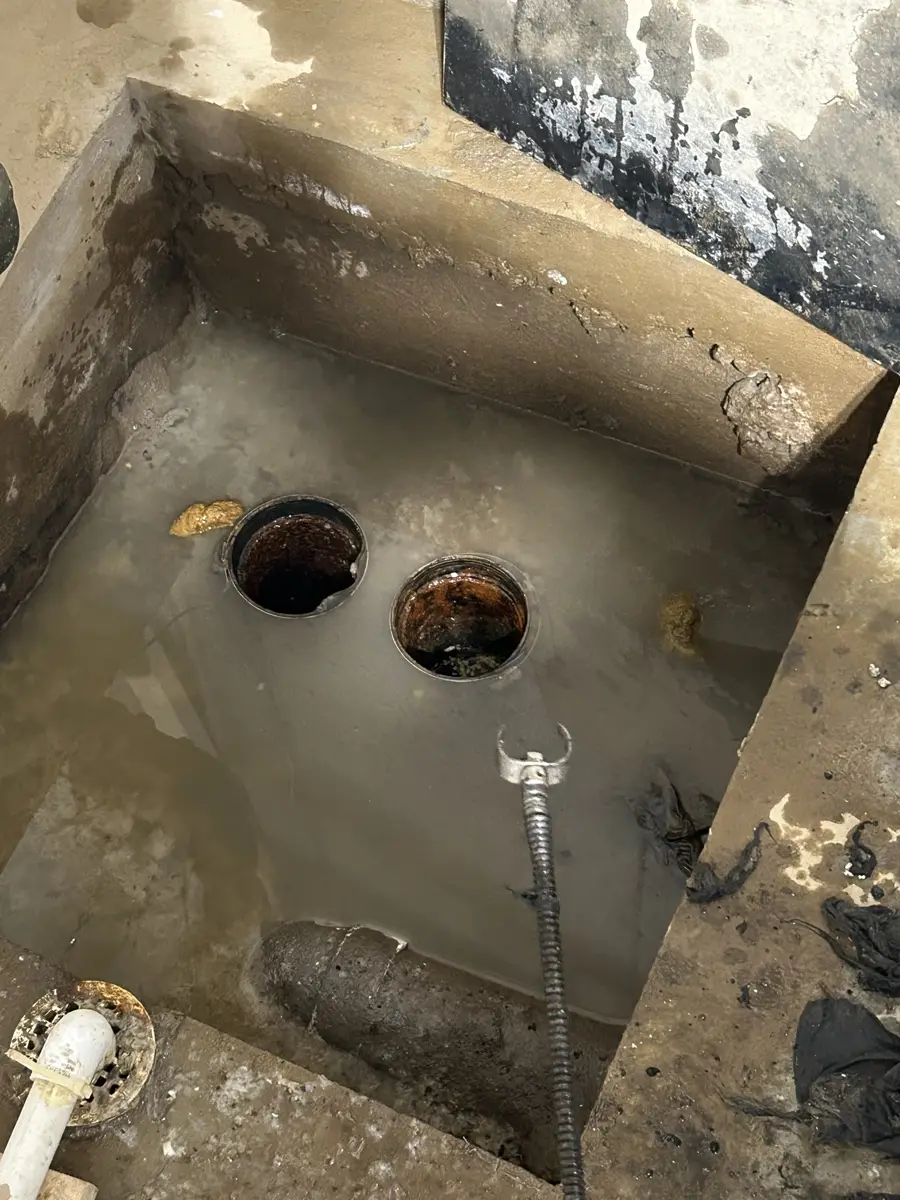
Photos and footage from our own work. No stock images.
Where we work
What we don't do. We clear, clean and inspect drains and sewer lines. If the camera shows a cracked, collapsed or separated line, you get the footage and a referral to an NYC master plumber for the fix. Why we work this way
Common questions
How do I know it's the main sewer line and not one drain?
If two or more fixtures are slow or backed up at the same time, or water comes up through the basement floor drain or lowest toilet when you run water upstairs, the main line is the likely cause.
How much does main sewer line cleaning cost in NYC?
Ours starts at $595 through an accessible cleanout, with a camera check included. Nights, weekends and holidays add $150. The technician confirms your price on site before any work starts.
Who is responsible for the sewer line, me or the city?
In NYC the property owner is generally responsible for the sewer service line from the building out to the city sewer in the street. If the camera shows the blockage is in the city main, you'd report it to 311. See our guide on who owns the sewer line in NYC.
What causes main line clogs?
The most common causes we pull out are wipes and paper towels, grease from kitchen lines, and tree roots that grow into joints in older clay and cast iron pipe. Heavy rain can make a partly blocked line back up faster.
Can you clear the line from outside?
Often, yes. If there's a front areaway or yard cleanout, we work from there, which keeps the mess out of the basement.
Will cleaning fix it for good?
Clearing opens the line. The camera check tells you whether it will stay open. If it shows roots or heavy buildup, hydro jetting cleans the pipe wall and lasts much longer than cabling alone.
What if the camera shows a broken pipe?
You get the footage and the distance to the problem, and we refer you to an NYC master plumber for the repair. We stick to clearing and inspection.
Can a main line clog fix itself?
Sometimes a partial clog drains slowly overnight, but it rarely clears on its own. The next heavy use or rainstorm usually brings it back, often worse.
Do I need to be in the basement during the work?
Someone needs to give the technician access to the cleanout or house trap and approve the price. You don't need to stay in the basement while we work.
Need a drain cleared?
Calls are answered 24 hours a day. A technician looks at the job and confirms your price on site before any work starts.